
Therapy Approaches
Proven, research-based methods to help you heal, grow, and move forward with confidence.
Dialectical Behavior Therapy (DBT)
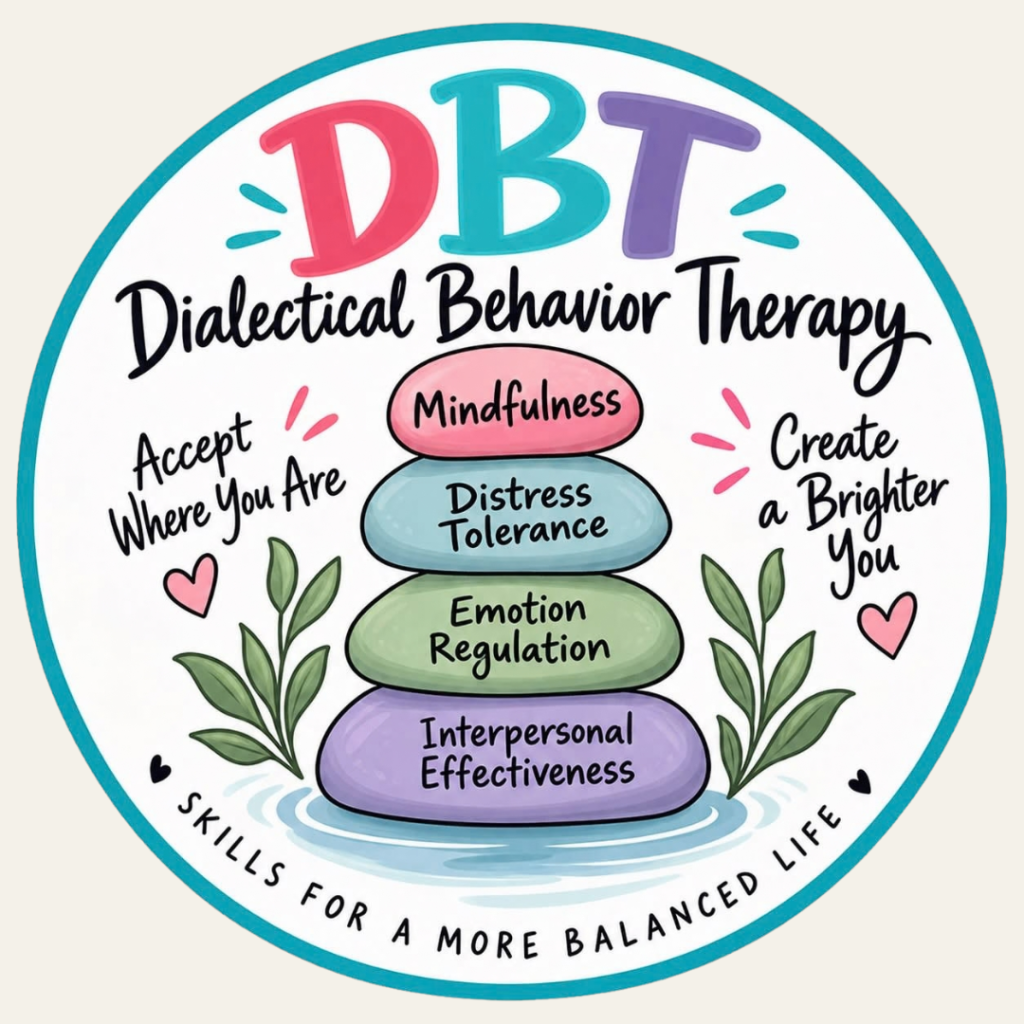
Dialectical Behavior Therapy (DBT) is a structured type of cognitive-behavioral therapy that teaches practical skills for handling intense emotions, stressful situations, and relationship difficulties.
“Dialectical” refers to holding two seemingly opposite ideas at the same time – especially acceptance and change. DBT commonly focuses on four skill areas:
- Mindfulness: staying present and observing thoughts and feelings without immediately reacting.
- Distress tolerance: getting through difficult moments without making the situation worse.
- Emotion regulation: understanding emotions and learning ways to manage their intensity.
- Interpersonal effectiveness: communicating needs, setting boundaries, and navigating conflict.
DBT was originally developed for borderline personality disorder and chronic suicidal behavior, but DBT-based approaches are also used for other difficulties involving emotion regulation.
Cognitive Behavioral Therapy (CBT)
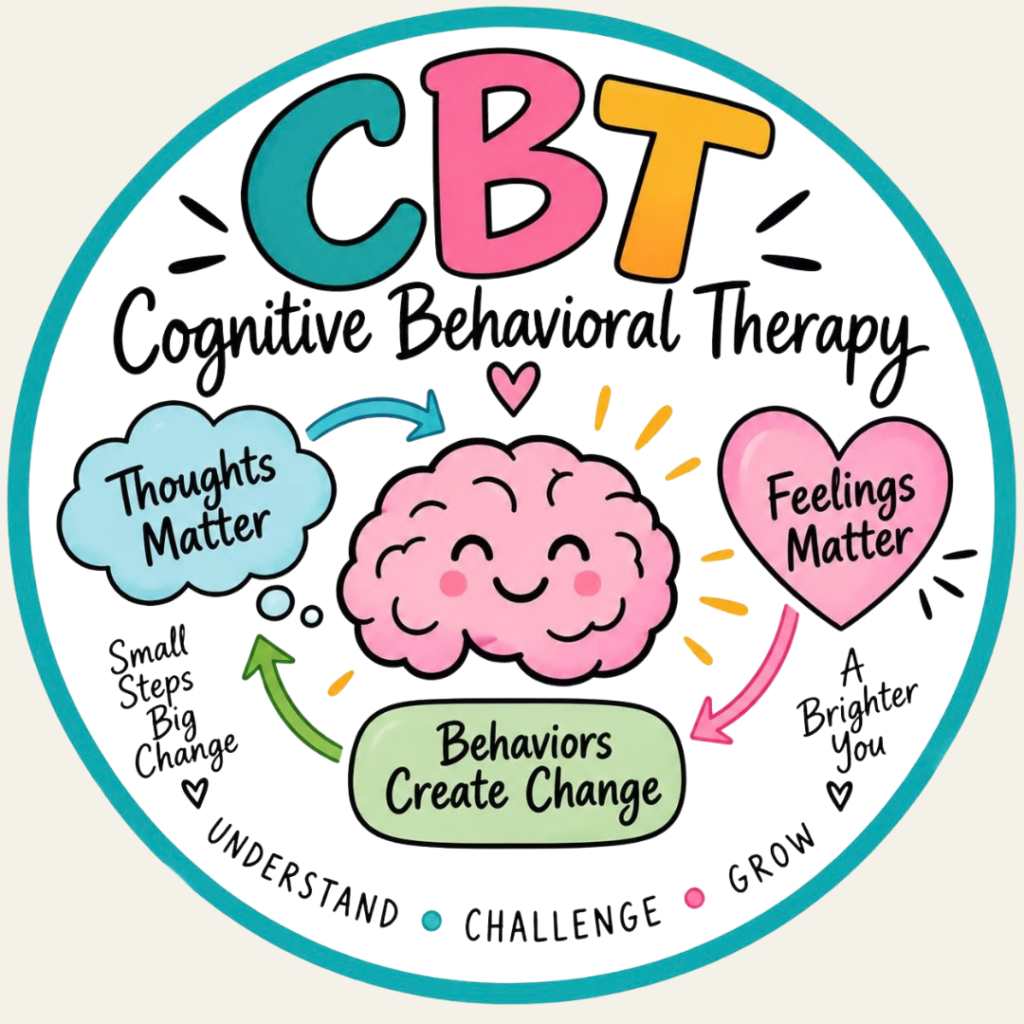
The basic idea is that these three areas influence one another. For example, a thought like “I’m going to mess this up” might increase anxiety, which could lead to avoiding the situation. CBT helps a person notice patterns like this, examine whether their thoughts are accurate or helpful, and practice different ways of thinking or responding.
Common CBT techniques include identifying unhelpful thought patterns, challenging or reframing thoughts, gradually facing situations that are being avoided, problem-solving, and practicing new behaviors.
A simple way to remember CBT is:
Thoughts ↔ Feelings ↔ Behaviors
Change in one area can create change in the others. CBT is commonly used for concerns such as anxiety, depression, phobias, PTSD, OCD, sleep difficulties, and stress.
Eye Movement Desensitization and Reprocessing (EMDR)
It’s a type of psychotherapy developed primarily to help people process traumatic or highly distressing experiences.
During EMDR, a therapist helps you briefly focus on a troubling memory while also engaging in bilateral stimulation – something that alternates attention from one side of the body to the other. This often involves following the therapist’s fingers with your eyes, but tapping or alternating sounds may also be used.
The goal isn’t to erase the memory. Instead, EMDR aims to help the memory become less emotionally intense and disruptive, while helping you develop more adaptive beliefs about the experience.
EMDR follows a structured eight-phase process that includes preparation, identifying a target memory and associated thoughts/emotions, reprocessing it using bilateral stimulation, and checking how you respond afterward.
It has particularly strong evidence for PTSD and trauma-related symptoms. Unlike traditional talk therapy, EMDR generally doesn’t require you to describe every detail of a traumatic experience aloud.
Trauma-informed Care (TIC)
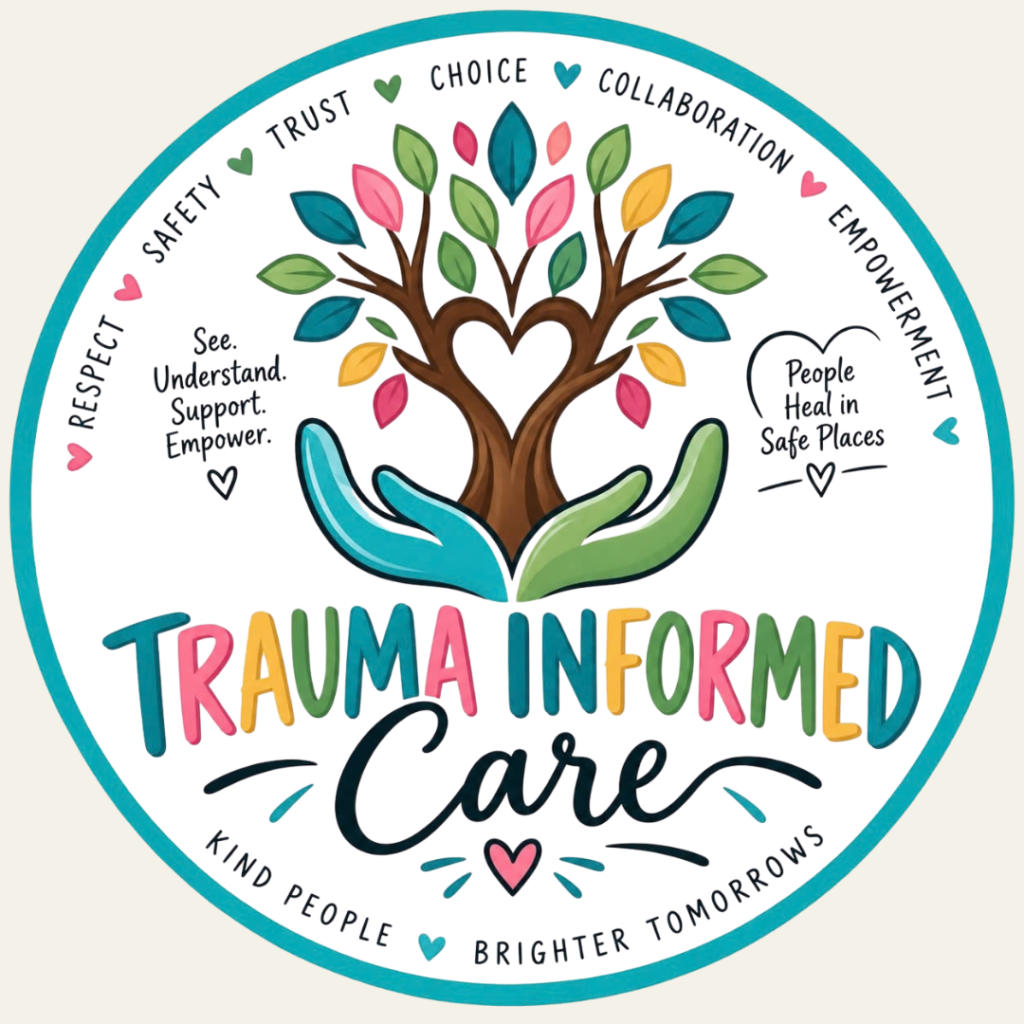
Is an approach to helping people that recognizes how trauma can affect a person’s emotions, behavior, relationships, health, and sense of safety.
Instead of focusing only on “What’s wrong with you?”, a trauma-informed approach considers “What happened to you, and what do you need to feel safe and supported?”
It generally emphasizes safety, trust, choice, collaboration, empowerment, and avoiding re-traumatization. For example, a trauma-informed provider explains what is going to happen, asks permission when appropriate, respects boundaries, offers choices, and recognizes that certain situations may trigger trauma responses.
Importantly, trauma-informed care isn’t itself a specific therapy. It’s a way of providing care that can be used in counseling, healthcare, schools, social services, and other settings. Treatments such as EMDR, CBT, or DBT may be provided within a trauma-informed approach.
Internal Family Systems (IFS)-Informed
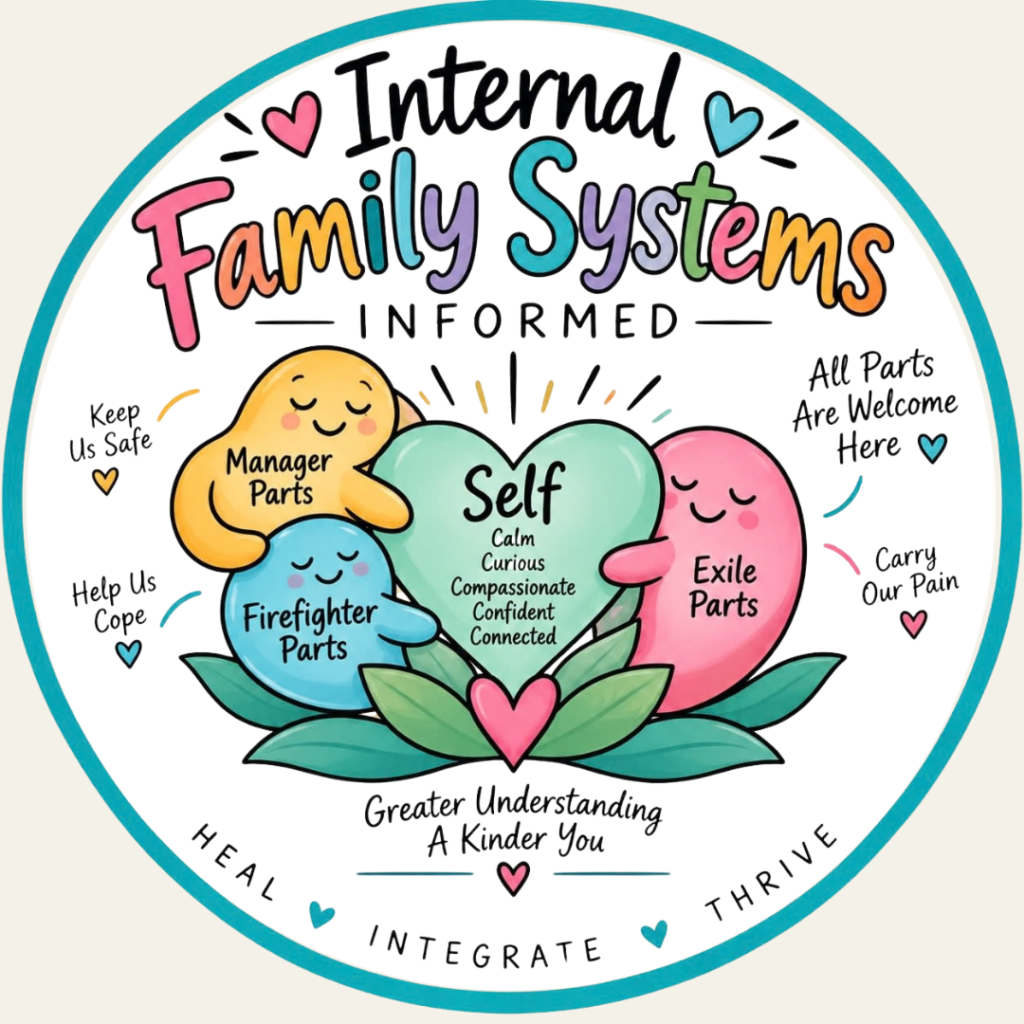
Internal Family Systems (IFS)-informed means a counselor or helping professional uses concepts and techniques from Internal Family Systems therapy, even if they are not providing the complete formal IFS treatment model.
FS views the mind as having different “parts.” These aren’t separate personalities; they’re ways of describing different emotions, beliefs, and protective responses within a person. For example, someone might have an anxious part, a perfectionistic part, a people-pleasing part, or a part that becomes angry to protect them from being hurt.
IFS commonly describes three types of parts: Managers, which try to prevent problems and maintain control; Firefighters, which react quickly to emotional pain and try to make it stop; and Exiles, which often carry painful memories, fear, shame, or other vulnerable emotions.
At the center of IFS is the Self, associated with qualities such as calmness, curiosity, compassion, confidence, and clarity. The goal isn’t to get rid of difficult parts. Instead, the person learns to understand why those parts developed, relate to them with compassion, and help them take on healthier roles.
When someone says their approach is “IFS-informed,” it usually means they incorporate these ideas into their work but may combine them with approaches such as CBT, DBT, EMDR, or trauma-informed care rather than practicing IFS as a standalone treatment.
Art and Play Therapy
Art therapy and play therapy are therapeutic approaches that use creative expression and play to help people communicate and process emotions and experiences. They can be especially useful when feelings are difficult to put into words.
Art therapy uses activities such as drawing, painting, sculpting, collage, or other creative work. The emphasis isn’t on artistic ability or making something “good.” The creative process can help someone explore emotions, experiences, relationships, stress, and trauma.
Play therapy uses play as a form of communication and expression. It may involve toys, games, puppets, storytelling, role-playing, sand trays, or imaginative play. It’s particularly associated with work with children, although play-based techniques can also be adapted for adolescents and adults.
Both approaches can provide a safe, less verbal way to express feelings, develop coping skills, build confidence, and work through difficult experiences. A counselor may also integrate art or play techniques with approaches such as CBT, DBT, trauma-informed care, or other therapies.
Emotional Brain Training (EBT)-Informed
Emotional Brain Training (EBT)-informed generally means using concepts or techniques from Emotional Brain Training, an approach designed to help people recognize and change stress-related emotional patterns.
The approach focuses on the idea that repeated experiences can create learned emotional and behavioral patterns. When stress is high, those patterns may contribute to reactions such as emotional eating, avoidance, anger, anxiety, or other coping behaviors.
EBT practices typically involve identifying your current stress level, recognizing the emotions and thoughts connected with it, and using specific emotional-processing techniques intended to help shift your response.
When a counselor says they are “EBT-informed,” it usually means they incorporate some EBT concepts or tools into their work rather than necessarily providing EBT as a complete, standalone treatment.
One distinction is important: EBT is not as extensively established or researched as therapies such as CBT or DBT. So it’s useful to ask a provider what they mean by “EBT-informed,” what techniques they actually use, and how those techniques fit with other evidence-based approaches.
Narrative Therapy

Narrative therapy is a type of talk therapy that helps people look at the stories they tell themselves about their lives, experiences, relationships, and identity.
A central idea is that “the person is not the problem; the problem is the problem.” Instead of defining someone by a difficulty – such as “I am anxious” or “I am a failure” – narrative therapy might explore how anxiety or feelings of failure have affected the person’s life.
The counselor helps the person examine where these stories came from, recognize experiences that don’t fit the negative story, identify personal strengths and values, and develop a more helpful and empowering understanding of their life.
For example, someone who thinks “I always give up when things get difficult” might explore times when they persisted, asked for help, protected themselves, or successfully handled challenges. Those experiences can become part of a richer and more accurate personal story.
In simple terms: Narrative therapy helps you separate yourself from your problems and recognize that you have the ability to shape the story you carry forward.
Grounding and Body Scanning
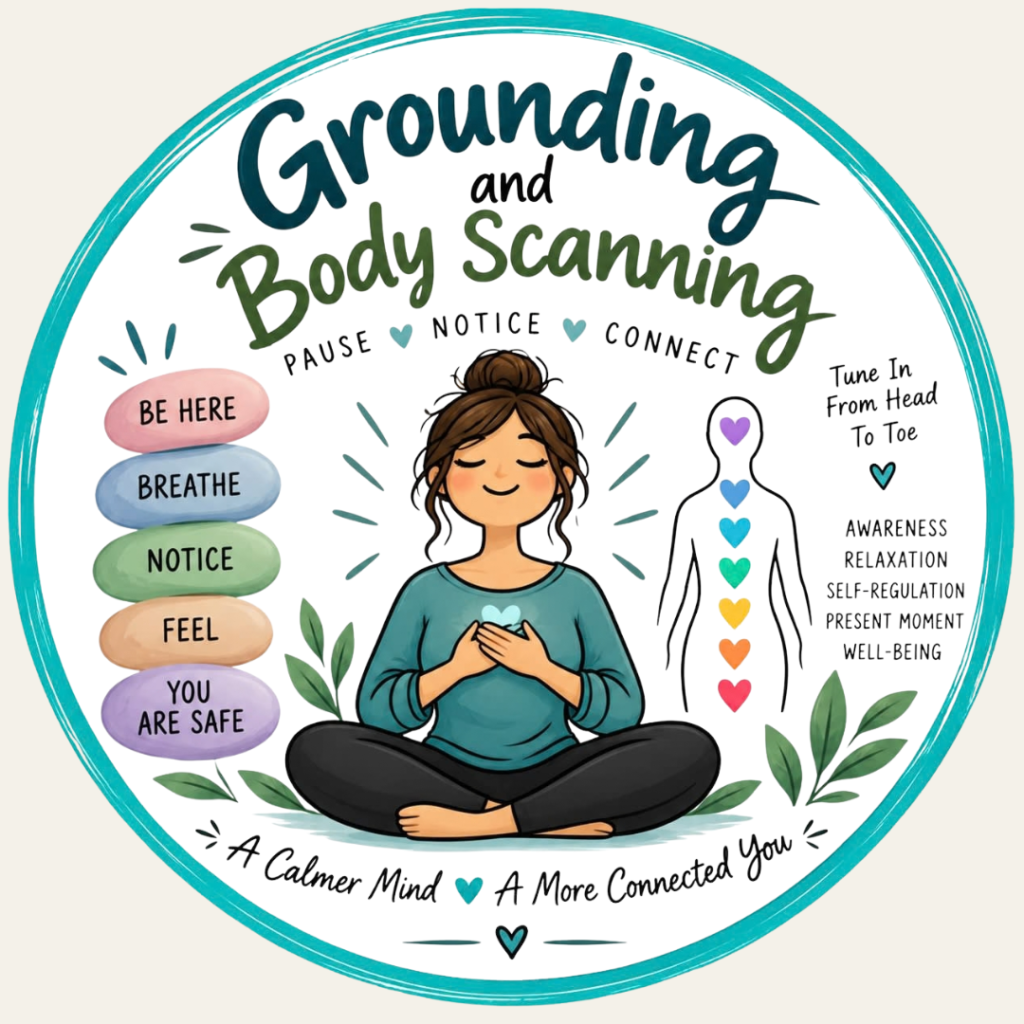
Grounding and body scanning are techniques used to increase awareness of the present moment and help manage stress, anxiety, or overwhelming emotions. They’re often incorporated into mindfulness and trauma-informed approaches.
Grounding helps redirect attention to what is happening right now, rather than becoming absorbed in distressing thoughts, memories, or emotions. One common example is the 5-4-3-2-1 technique: notice 5 things you can see, 4 you can touch or feel, 3 you can hear, 2 you can smell, and 1 you can taste.
Body scanning involves slowly directing attention through different areas of your body—such as your feet, legs, stomach, shoulders, hands, and face—and simply noticing sensations such as warmth, tension, pressure, tingling, or relaxation. You generally aren’t trying to force the sensations to change; you’re practicing noticing them.
Together, the techniques can support present-moment awareness, recognition of physical signs of stress, and self-regulation. For some people with a trauma history, focusing closely on bodily sensations can initially feel uncomfortable, so body scanning can be adapted – for example, keeping the eyes open or focusing on external sensations instead.